
The Bingel Laboratory
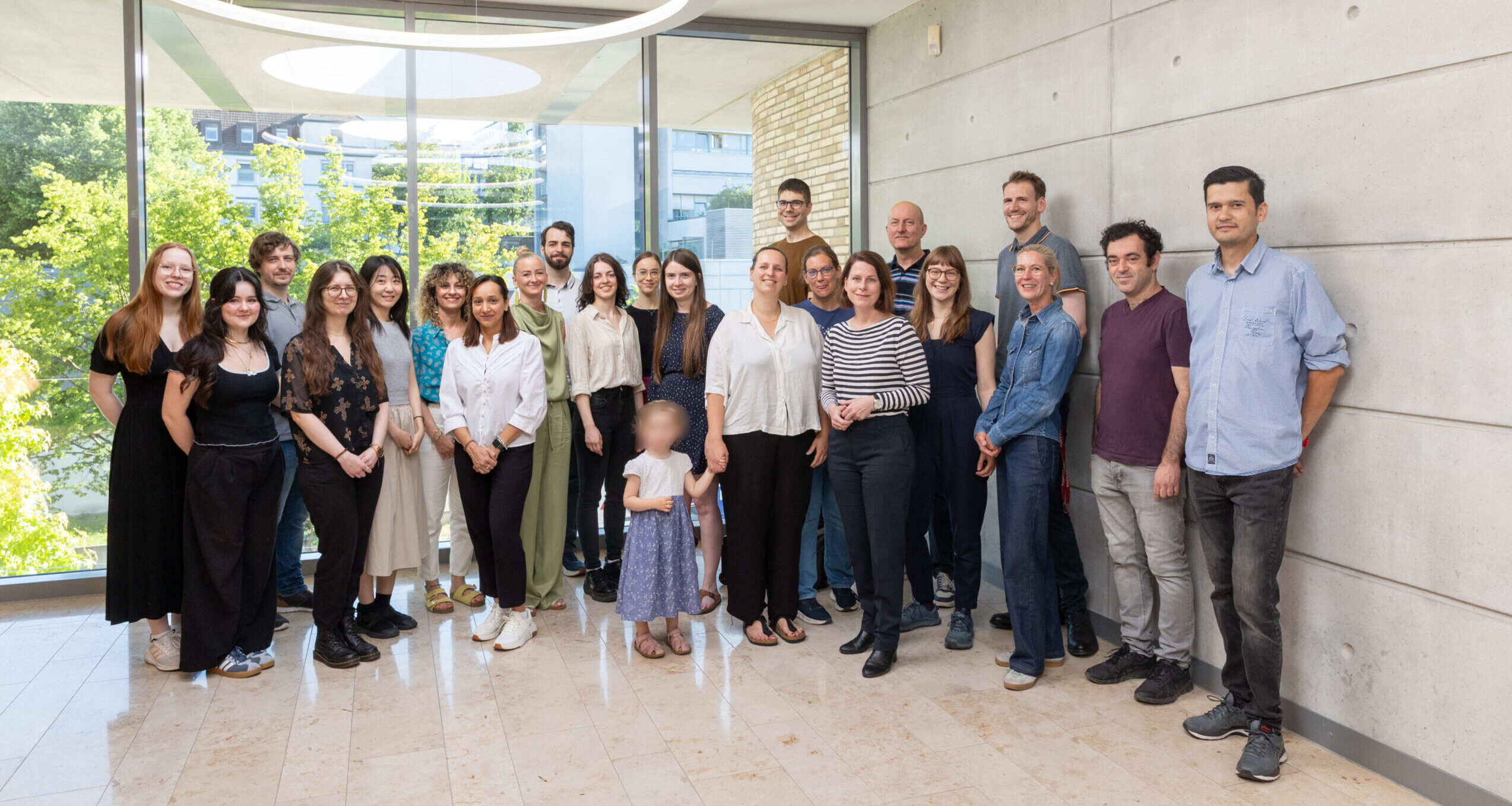
Prof. Dr. Ulrike Bingel and her research group focuses on the interaction between pain and cognitive processes. We have a longstanding expertise in investigating the CNS mechanisms underlying nociception, pain, and pain modulation in health and disease. In our research, we use behavioural paradigms, pharmacological modulations, as well as functional and structural brain imaging. Being particularly intrigued by the reciprocal effects of pain and cognition, we have a strong focus on translational questions such as the role of expectations and prior experiences on analgesic treatment outcomes. Our interdisciplinary research group comprises neurologists, neuroscientists, psychologists, biologists, and computer scientists and is based at the Department of Neurology at the University Medicine Essen. We are affiliated with the Erwin-L-Hahn institute for magnetic resonance imaging and the Translational Pain Research Department of the University Pain Center. Our research is funded by the Deutsche Forschungsgemeinschaft.
Recent News
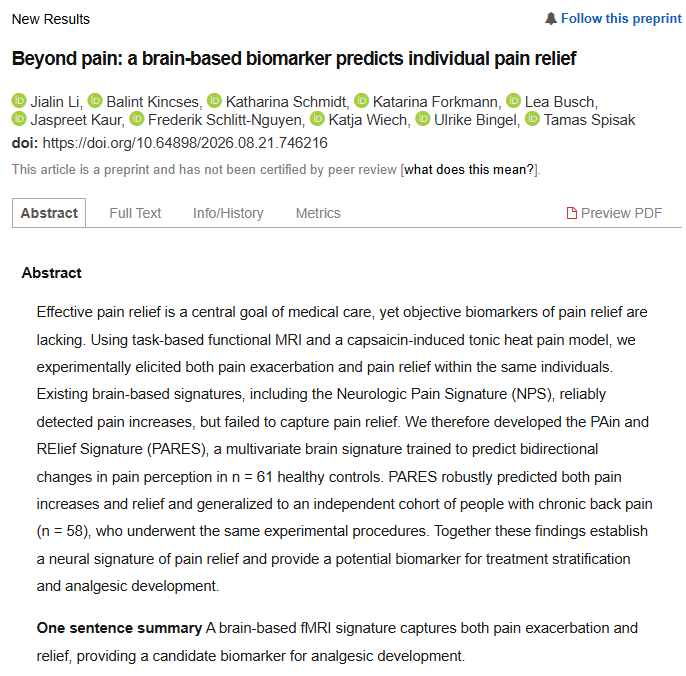
Our PhD student Jialin Li developed the PAin and RElief Signature (PARES), a multivariate brain signature trained to predict bidirectional changes in pain perception. Existing signatures like the NPS or SIIPS mainly detect increased pain, but this doesn't capture the full extent of pain perception. PARES robustly captures both pain exacerbation and pain relief and combines predictors with preferential contributions to pain increase and pain relief. As this signature captures both pain exacerbation & relief, it is an ideal candidate biomarker for analgesic development. Read the full preprint published on bioRxiv here.

Are you interested in writing your medical dissertation in the field of pain research? Then we're looking for you! "Layers of Pain" is a super cool project based at the Erwin L. Hahn Institute for Magnetic Resonance Imaging (ELH). It will use 7 Tesla neuroimaging techniques to better understand how different cortical layers in the brain contribute to pain processing in health and disease.
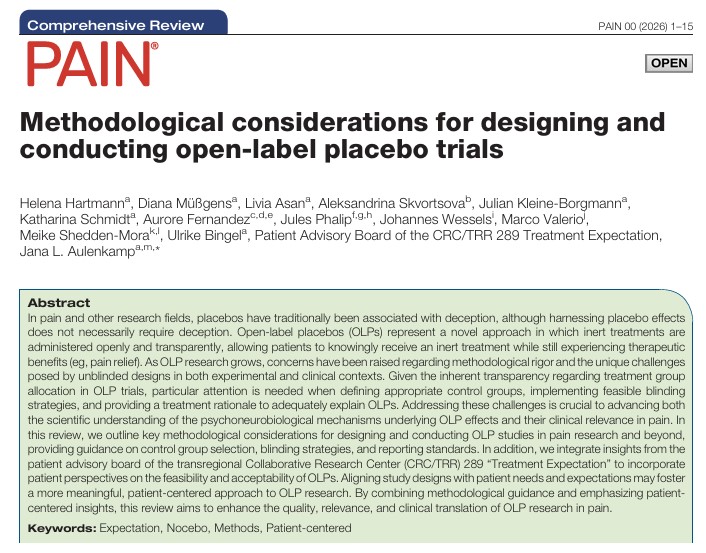
Open-label placebos (OLPs) are an inert treatment administered openly and transparently, allowing patients to knowingly receive a placebo while still experiencing therapeutic benefits (eg, pain relief). In this review, we outline methodological considerations for designing and conducting open-label placebo studies in pain research and beyond, providing guidance on control group selection, blinding strategies, and reporting standards - with direct experience in conducting OLP studies from each author. In addition, we gathered insights from the patient advisory board of the transregional Collaborative Research Center (CRC/TRR) 289 “Treatment Expectation” to incorporate patient perspectives on the feasibility and acceptability of OLPs. Read the full paper published in the journal PAIN here.

Huge congrats to Dr. Balint Kincses, who has received the 2026 IFORES Career Kickstart grant for his project titled "Layers of pain: uncovering the mechanisms in the cortical integration of bottom-up and top-down processes in pain perception and its modulation using ultra-high field fMRI". He will conduct his work at the Erwin L. Hahn Institute using 7 Tesla neuroimaging to differentiate the role of different cortical layers.